


Some people work in an industry for a career. Others become
part of its history.
"Some people work in an industry for a career."
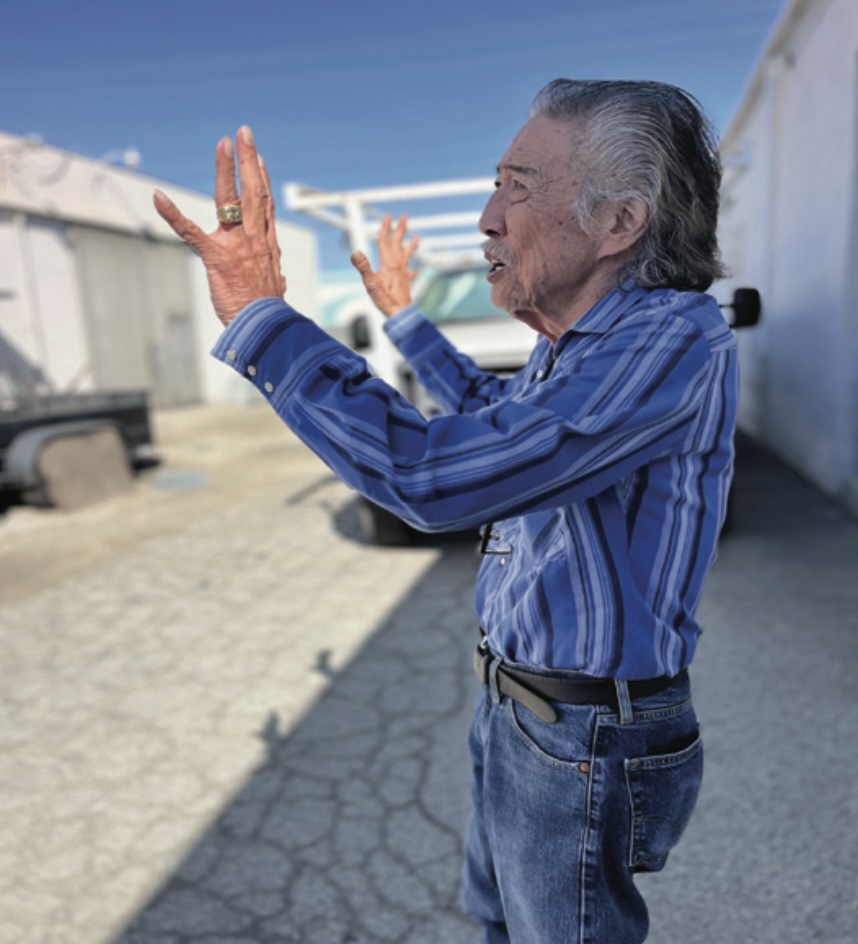
Arthur “Art” Kajiwara falls squarely into the second category.
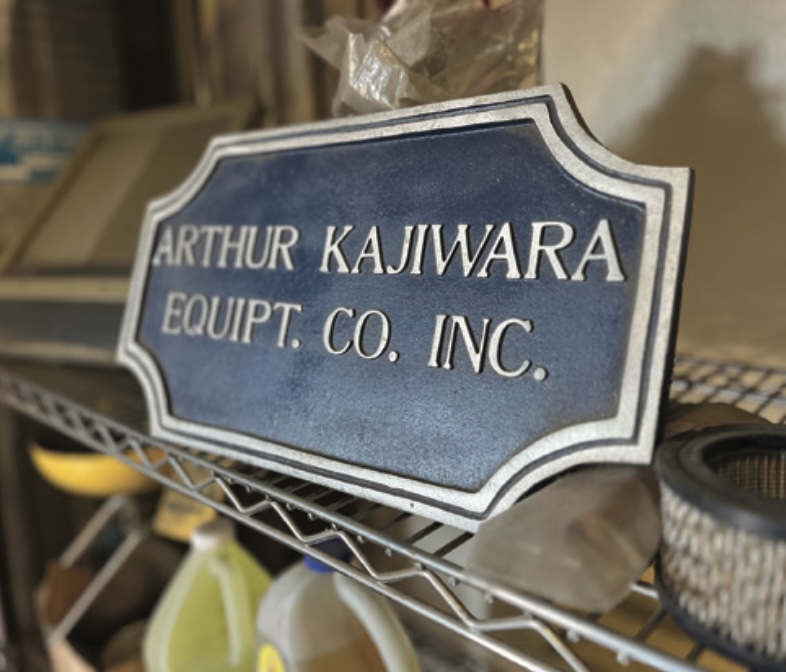
dry and dry cleaning business. He has designed plants, installed
and serviced equipment, sold machines, represented manufacturers,
developed equipment improvements and watched the industry
transform through good times, recessions, changing technologies
and changing generations.
And he is still showing up for work. This summer has been one
for the books in Southern California, with weeks of above-normal
heat, tropical humidity and even a few solid rainstorms. But none of
it seems to have slowed Art down.
When I recently visited him at his office, I found a man who
remains remarkably sharp, engaged and enthusiastic about the busi-
ness he first entered as a child. Above his desk sit blueprints from
hundreds of dry cleaning plants and commercial laundries — projects
Art drafted and designed himself over the decades. They are more
than old plans. They represent a lifetime of work and a career that has
taken him from Hawaii to the mainland and as far away as Taiwan.
Ask Art about the laundry business and it quickly becomes appar-
ent that there are very few areas of the industry he hasn't touched. Dry
cleaning plant design, pressing equipment, dry cleaning machines,
chemicals, leather cleaning equipment, machine parts, installations
and distribution — Art has seemingly done it all. And after 71 years,
he still talks about the business with excitement.
Arthur Kajiwara was born in Honolulu, Hawaii, in 1944 — 15
years before Hawaii became the 50th state. Both of Art's parents
were born in Hawaii, and he remembers growing up at a time when
much of the island was still covered in sugarcane fields. Laundry
and dry cleaning were already part of the Kajiwara family. Art's
father supplied dry cleaning chemicals and other products to clean-
ers throughout Honolulu and the surrounding areas, making Art a
second-generation laundry man. His introduction to the business
came early.“My dad put me to work at the age of 11,” Art recalled.
At the time, helping with the family business was simply part of life.
Everyone was expected to contribute.
“Since then, this is the only business I have ever been in,” Art
said. Few people in our industry — or any industry — can make
that statement after more than seven decades. In 1962, Art's father
sent him to the mainland with a simple purpose: learn everything he
could about pressing equipment. Art went to Salt Lake City, Utah,
where Ajax Laundry Pressing Equipment was headquartered. The
experience became an education that would help shape the rest of
his career. He studied the equipment and learned as much as he could
about how the machines operated, how they were serviced and how
they could be used most effectively in a working plant.Within just a
few months, Art had developed an impressive knowledge of pressing
equipment. That knowledge would stay with him for a lifetime.
Not long afterward, Art made his way to Los Angeles, where he
saw opportunities that simply weren't available to him back home.“It
was very tough to make a living in dry cleaning service and repair
in Hawaii,” Art remembered. “When I got to Los Angeles, I realized
this was a place I could make it.” And make it he did.
In the beginning, Art focused primarily on service and installa-
tions. But his abilities went well beyond repairing equipment. Art
had learned drafting in school when he was only 12 years old. That
early skill gave him a tremendous advantage when he began design-
ing complete dry cleaning plants. Soon, Art wasn't simply installing
individual pieces of equipment. He was helping create entire plants
from start to finish. Business grew.
At one point, the company employed 14 people. The building was
filled with machines and parts, while service trucks and vans came
and went throughout the day. It was a busy operation during a period
when dry cleaning plants were opening and expanding throughout
Southern California and beyond. Then came a phone call that would
open another chapter in Art's career.
One day, while sitting in his office, Art received a call from a man
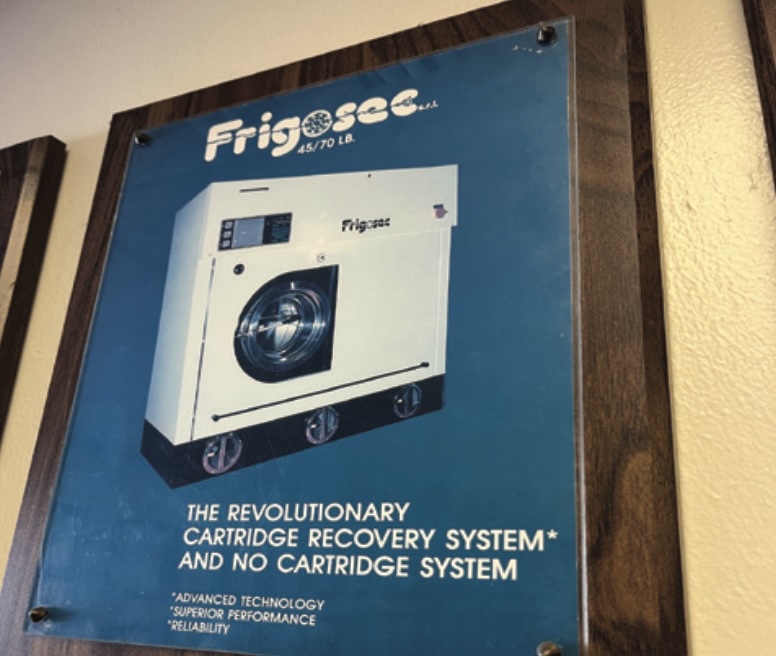
in Italy named Adolfo Bossi.“A guy from Italy named Adolfo Bossi
called me and asked for a meeting,” Art recalled. Before long, Art
was on a plane overseas discussing the development of a dry clean-
ing machine designed specifically for the American market. That
relationship eventually helped bring Frigosec to the United States.
Art was no longer simply a service technician and plant designer.
He was firmly in the equipment distribution business, representing
companies including Parker Boiler, Hi-Steam and Forenta, among others. His experience working directly with equipment also gave him ideas about how machines could be improved. Art told me that
every few years he would make relatively simple but important
improvements to the equipment. Eventually, he even designed a
dry-to-dry leather cleaning machine for Brownies Suede & Leather.
The company continued to grow. Sales increased, equipment moved
through the building and Art and his team were designing and build-
ing complete plants. During the busiest years, they were completing
approximately six or seven plants annually while also importing
machines from Italy and installing them for cleaners.
Art had gone from an 11-year-old helping his father in Hawaii to
becoming a respected equipment expert, distributor and plant designer
serving customers across the industry. Over the decades, Art's work
took him far beyond Southern California. He designed and worked
on projects from Arizona to Hawaii and even across the Pacific. One
project took him all the way to Taiwan. “We took a trip to Taiwan to
design an entire laundry plant,” Art remembered. “After two weeks,
I decided it was time to come home, but the project was not finished
yet, so I sent another crew back to finish the job.”
Sitting in Art's office today, surrounded by decades of blueprints,
equipment parts, awards and memorabilia, it is easy to see the physical
evidence of those years.Each drawing represents a plant. Each plant
represents a customer. And collectively, they tell the story of a man
who spent his career building things.
After more than seven decades in the business, Art has seen nearly
every cycle the dry cleaning industry has experienced. He cites the
economic crash of 2008 as the first significant decline in new plant
construction he witnessed during his career. Then came 2020 and
another major disruption for cleaners across the country. Art be-
lieves those challenges have accelerated changes that were already
occurring within the industry. “You see, the small mom-and-pops
are closing down, and the cleaners that are focusing on specialty
work are doing better,” Kajiwara said. “Discount cleaners are dead
as far as I see it.” It is the perspective of someone who has watched
generations of cleaners open their doors, expand, change ownership
and, in some cases, disappear.
But Art isn't pessimistic about the business. Far from it. “There is
still business to get,” he said. “You just need to know where to find
it.” That statement may say as much about Art Kajiwara as anything
else. After 71 years, he is still looking for the next opportunity.
Things may be a little slower today than during the years when the
company was building six or seven plants annually, but Art and his
team remain active. His daughter Diana works alongside him, as does
longtime service technician Jim. The company continues to sell new
machines and provide service, while Diana also handles a significant
parts business. Art is still in the office four days a week. Walk through
the building and you see pieces of laundry and dry cleaning history
everywhere — equipment, parts, photographs, memorabilia and Ajax
and Parker Boiler Dealer of the Year awards hanging on the walls.
But the most valuable thing in the building may be the knowledge
Art carries with him. After seven decades, his mind remains sharp, and he can tell you not only how a machine works but probably how the machine that came before it worked as well.
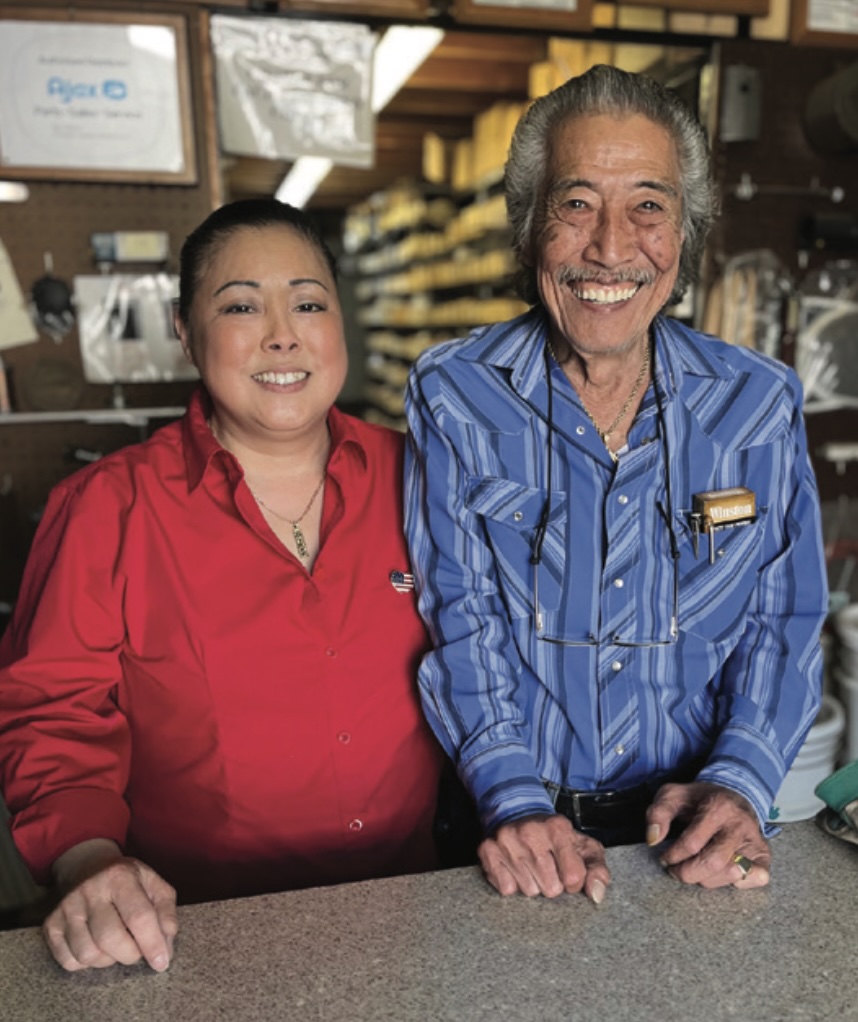
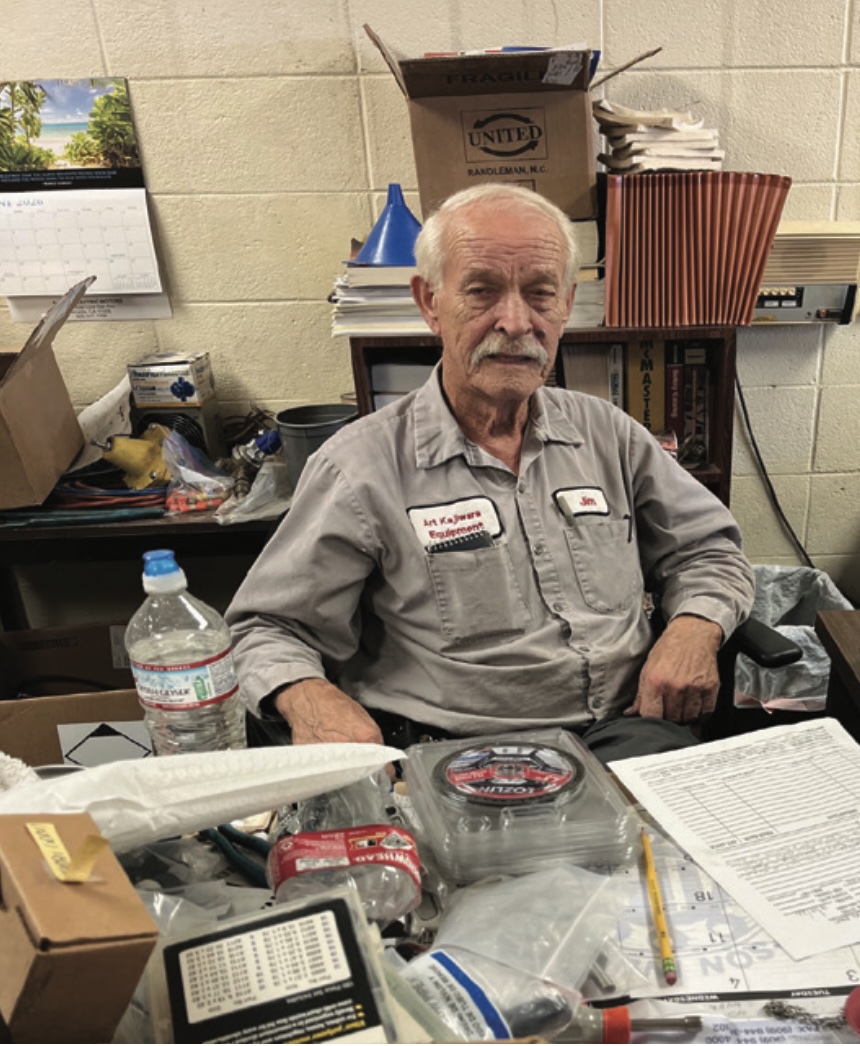
Art with Daughter Diana and logntime Service Tech Jim
My visit with Art also became personal for me. As we sat talking,
I couldn't help but become a little nostalgic. Art has been advertising
in Cleaner & Launderer for almost 50 years. Long before digital
advertising, emails, online contracts and electronic signatures, Art
and my grandfather made a handshake deal to advertise in this pub-
lication. That handshake turned into a relationship that has remained
intact for nearly half a century. There is something special about that.
Our industry has always been built on relationships. Manufac-
turers and distributors, cleaners and customers, fathers and sons,
mothers and daughters — businesses and friendships passed from
one generation to the next. Art Kajiwara represents that tradition as
well as anyone I have met.
Before leaving, I told Art that I hope to see him at the Clean Show
in Las Vegas in 2027. If he makes the trip, I have a feeling there
may not be many people walking that show floor who can say they
have spent more years in the laundry and dry cleaning business than
Arthur Kajiwara. Seventy-one years. Think about that for a moment.
And the industry itself has certainly changed. But some things ha-
ven’t. Knowledge still matters. Relationships still matter. Reputation
still matters. And there is still no substitute for showing up, doing
good work and standing behind what you sell. So, if you happen to
see Art at the Clean Show in 2027, stop and shake his hand. You
won't just be meeting another equipment man. You'll be meeting a
piece of dry cleaning history. And knowing Art, don't be surprised
if he has another machine to sell, another plant to design or another
deal waiting on his desk. After 71 years, he's still not finished. CLJ
Key Takeaways
- Why This Shift Is Happening matters for readers making practical decisions.
- How Local Providers Stand Out matters for readers making practical decisions.
- Some people work in an industry for a career.
- part of its history.
